



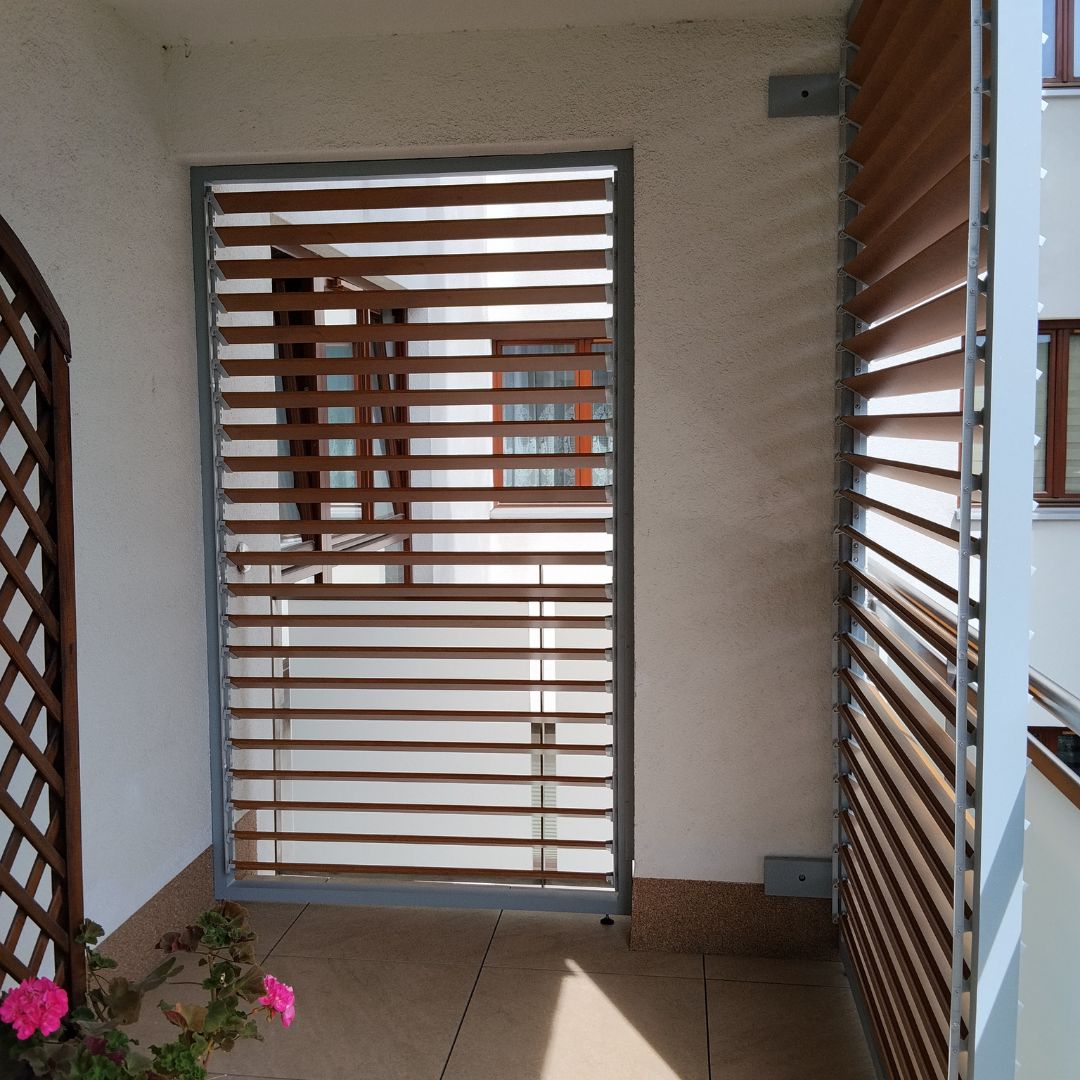
How do I choose external blinds for my terrace or balcony? A technical compendium before purchasing
Wondering how to choose outdoor blinds for your terrace or balcony? In this guide we explain where to start and what to look out for.
A well-designed enclosure can completely change the use of a terrace or pergola. Suitably selected external blinds help to increase privacy, reduce heat build-up in the space and better protect against wind or excessive sunshine. However, it is not only the appearance of the fitting that is important, but also its design, the division of modules and the way it is assembled.
Most problems with external blinds occur not during installation, but much earlier - at the development planning stage. A poorly chosen division of the modules, the wrong material or a lack of consideration for the world sides can later make it difficult to use the terrace or pergola on a daily basis.
It is therefore worth thinking carefully before buying:
- installation method,
- size of modules,
- opening direction,
- fin material,
- wind load,
- and the supporting structure.
Not sure how many built-in kits you will need? See, How to calculate the number of blinds. Take advantage of our calculator.
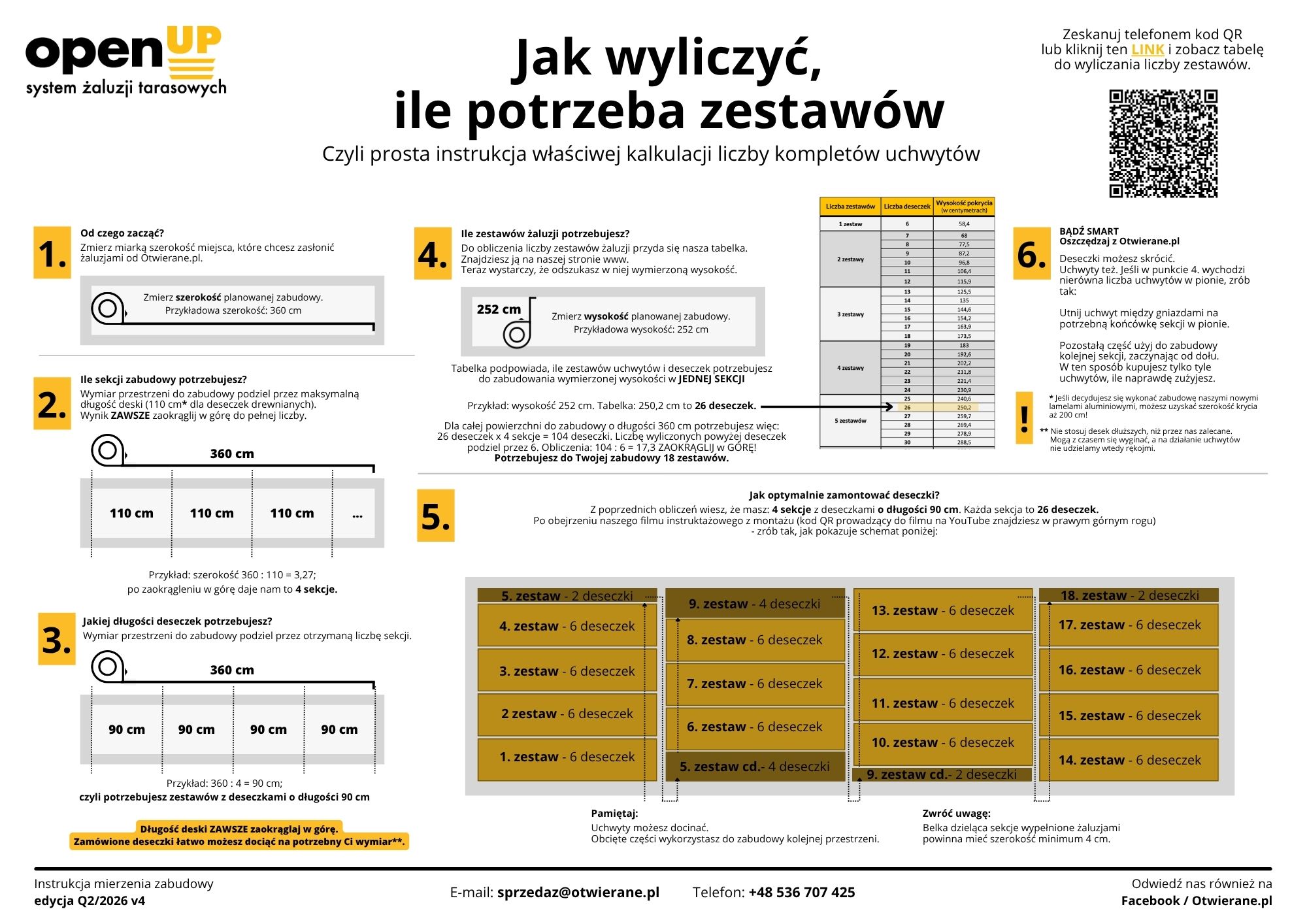
How do I plan the division of external blind modules for the terrace?
This is one of the most important stages in the design of external blinds.
Modules too wide:
- increase the weight of the structure,
- work harder in the wind,
- may cause more resistance during opening,
- and put more strain on the mechanism.
In practice, larger developments are better divided into several independent segments. This way:
- easier to control the blinds,
- the structure is more stable,
- and individual modules work more lightly.
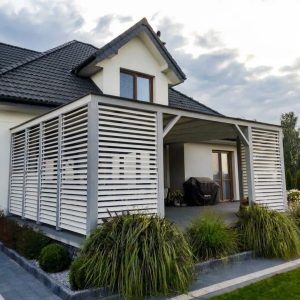
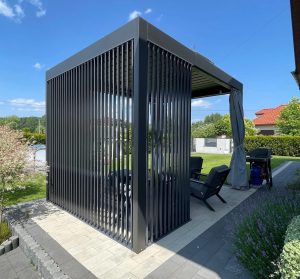
How to choose outdoor blinds for a terrace - vertical or horizontal?
The arrangement of the fins not only affects the appearance of the development, but also the way the system works.
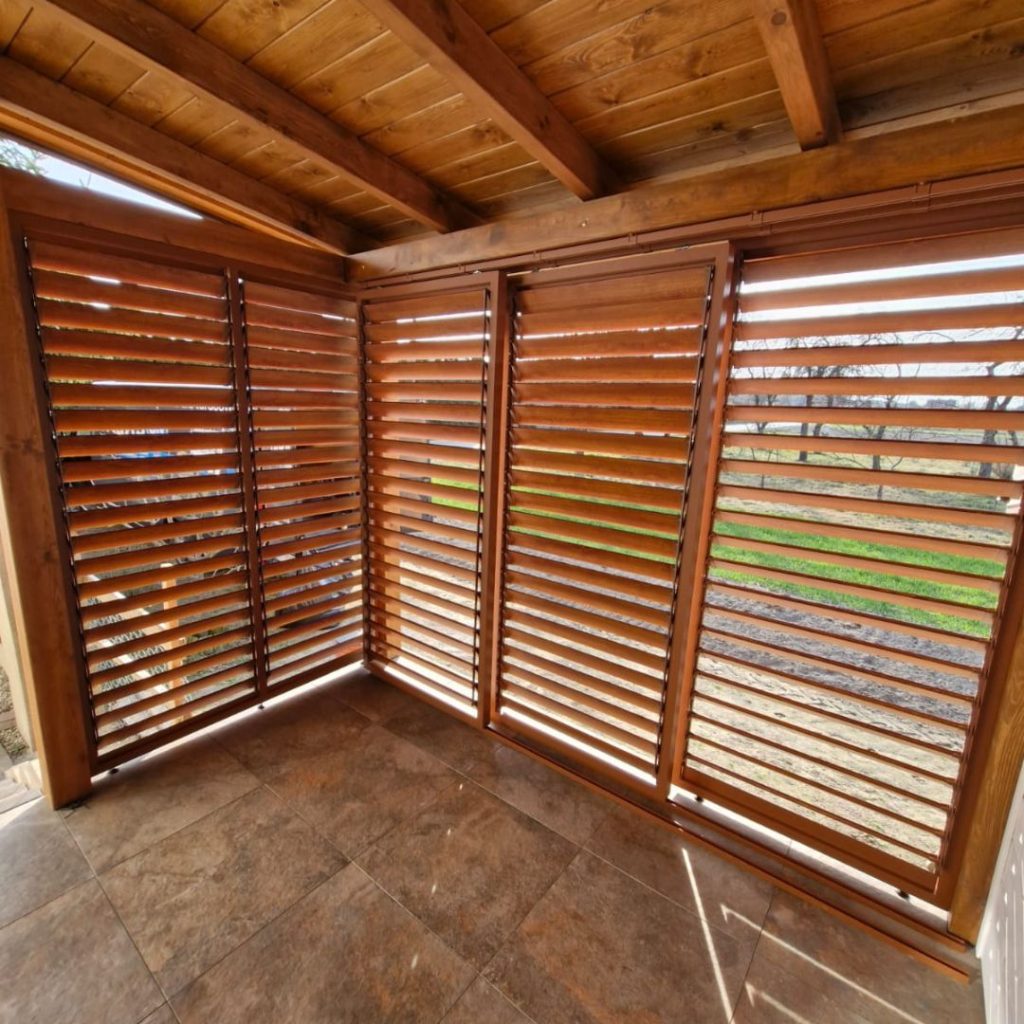
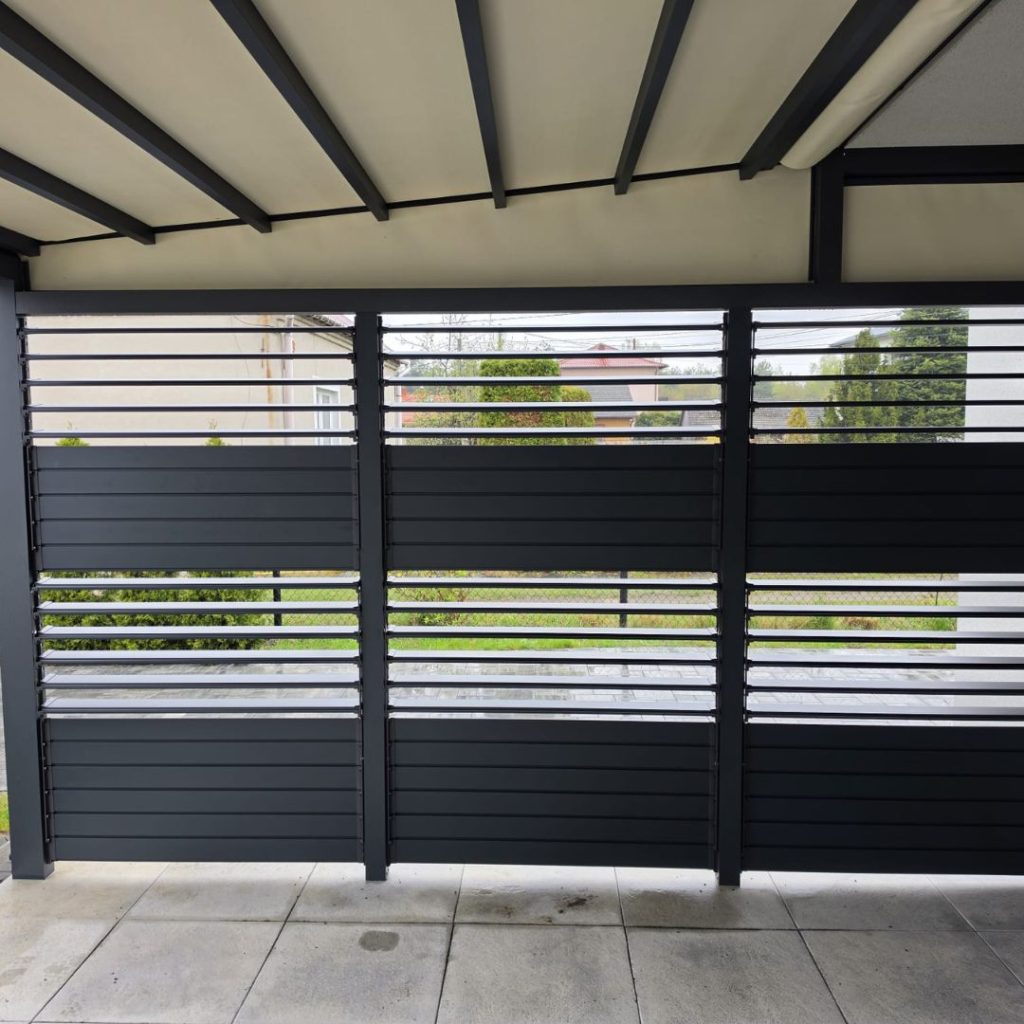
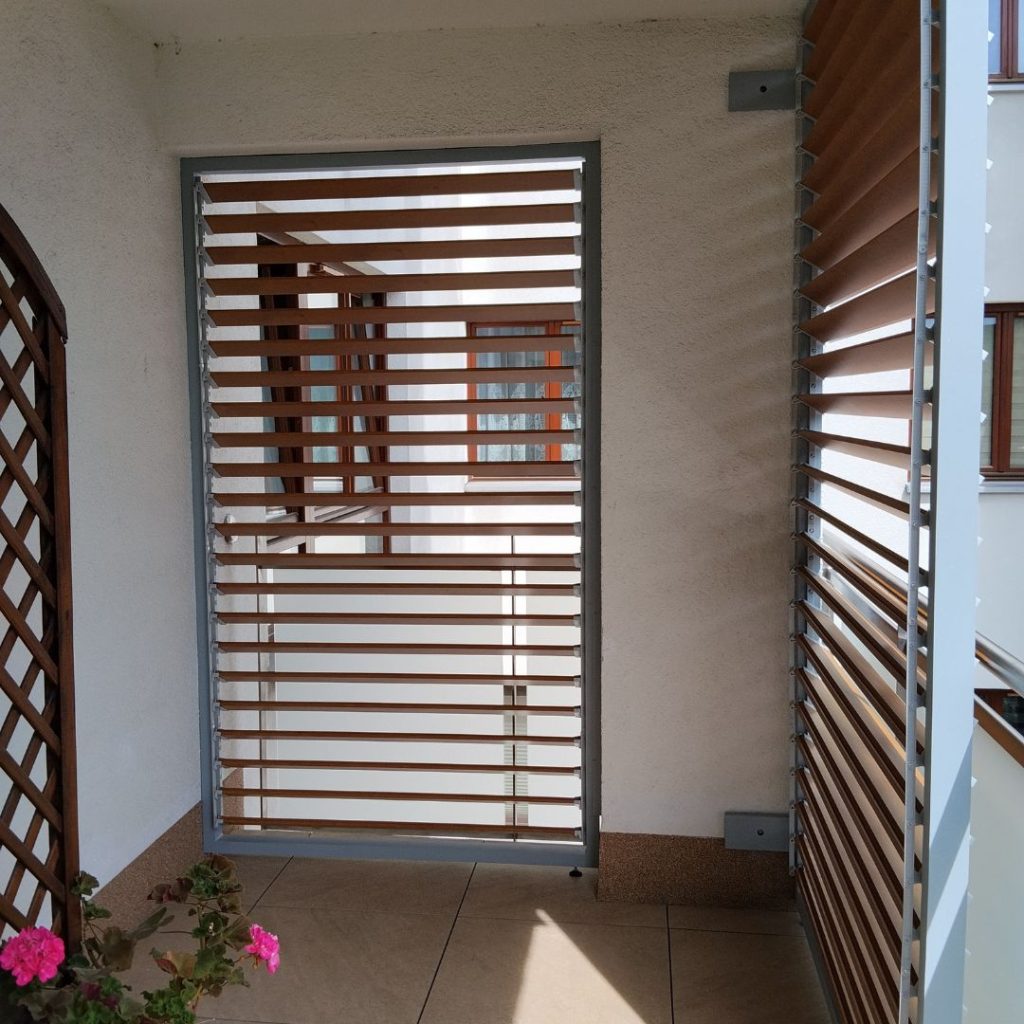
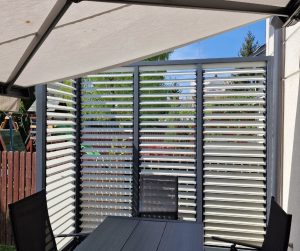
Horizontal blinds:
- provide greater protection from the sun,
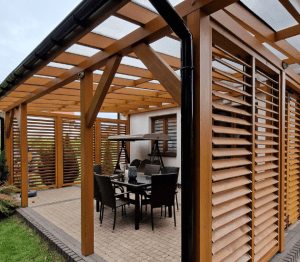
- work well with pergolas,
- and often give a more modern effect.
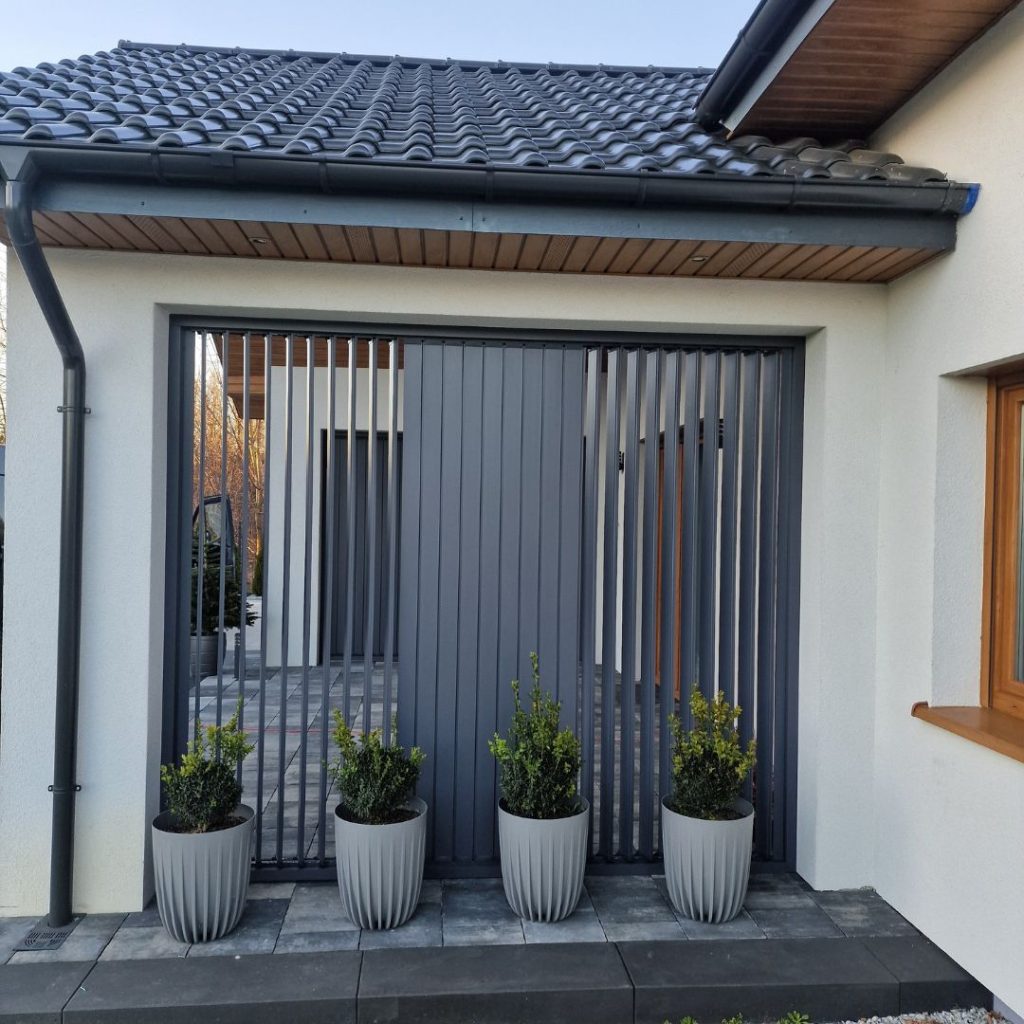
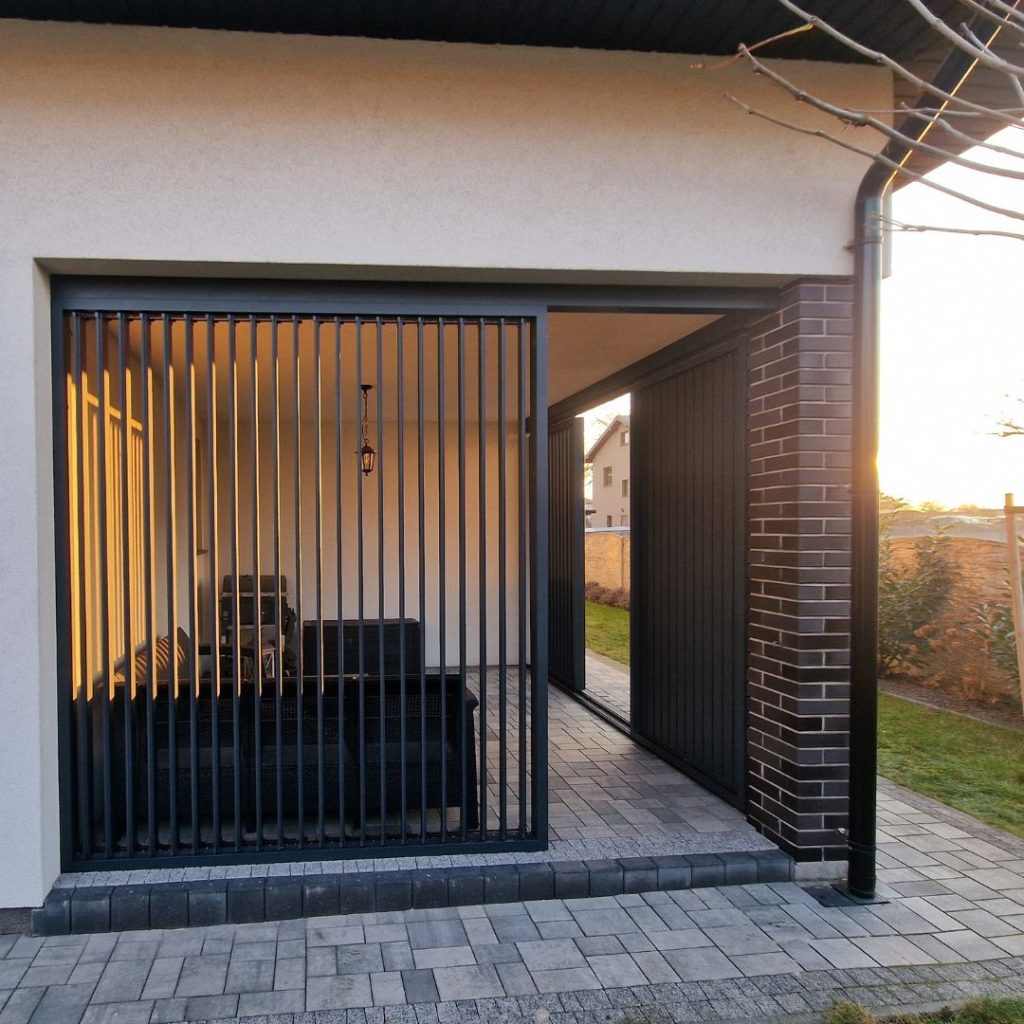
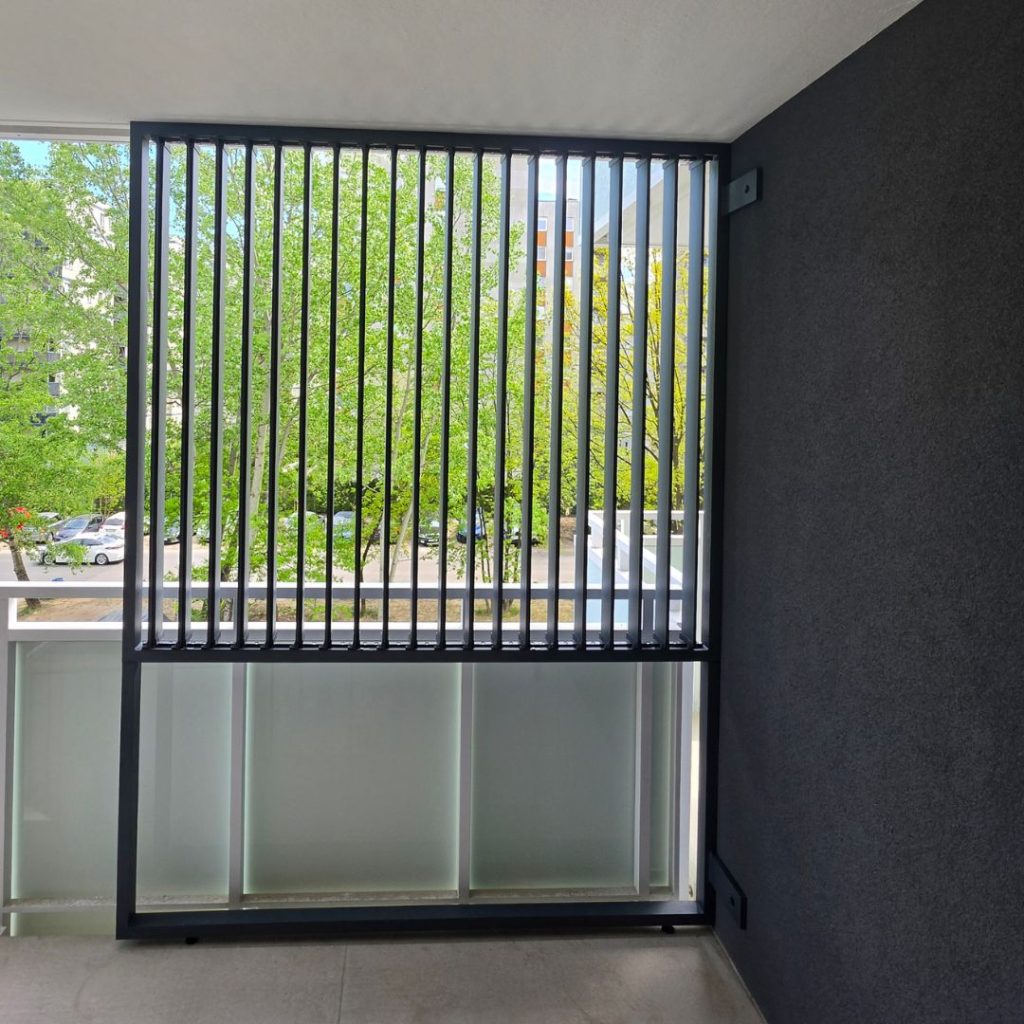
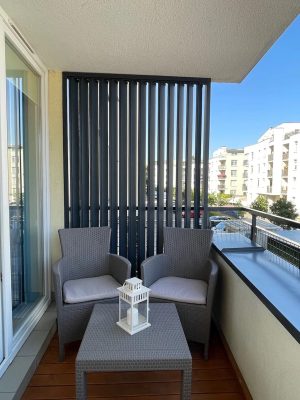
Vertical blinds:
- optically raise the structure,
- are better suited to high buildings,
- and often cope more easily with gusts of side wind.
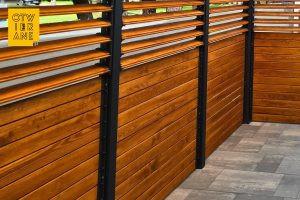
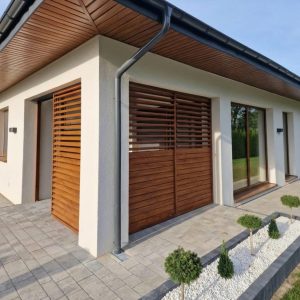
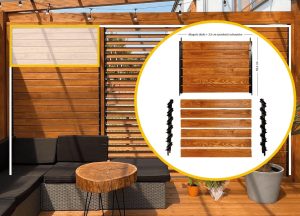
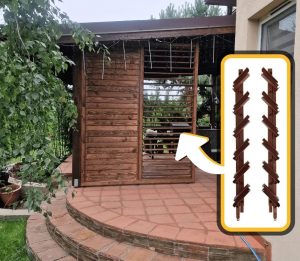
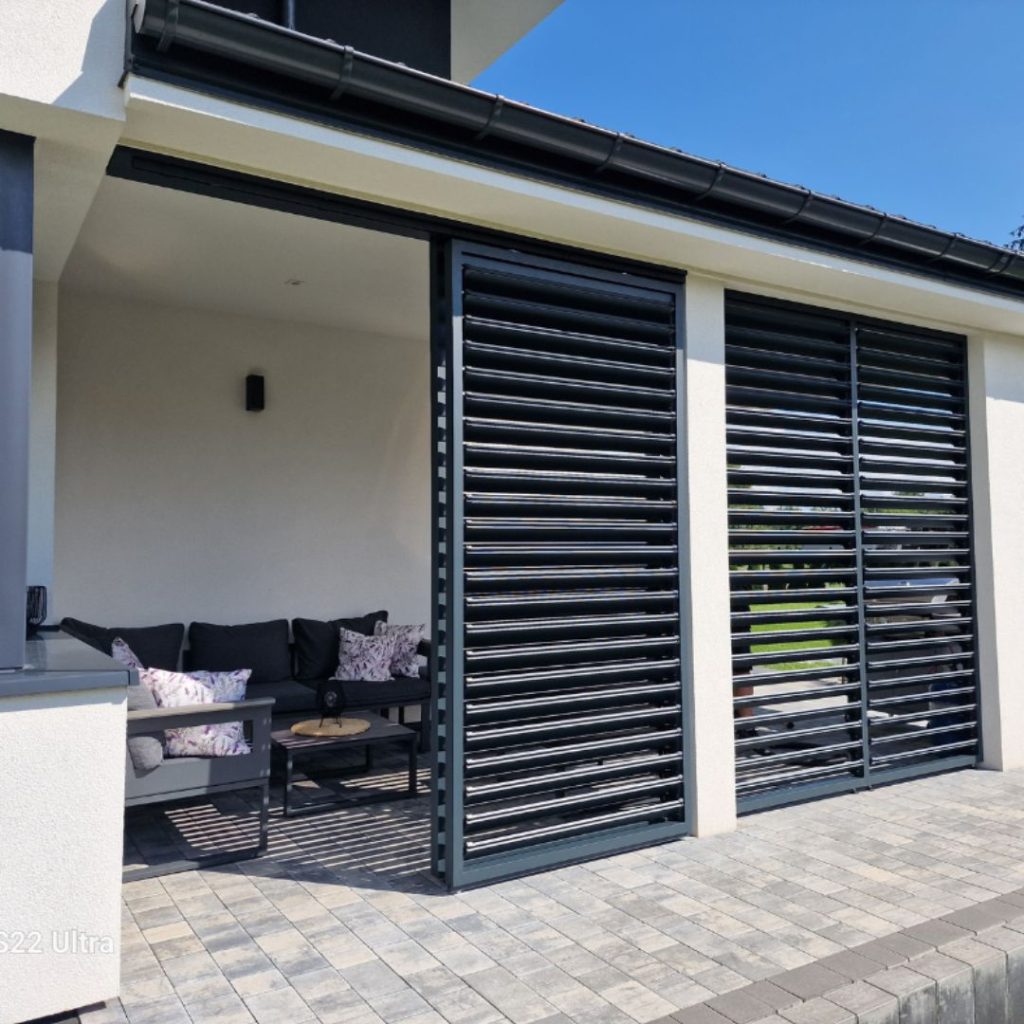
In OpenUp System external blinds, the movable louvres can be mounted both vertically and horizontally.
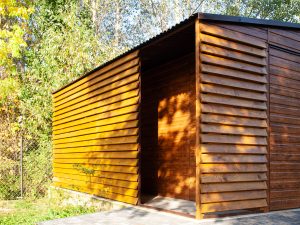
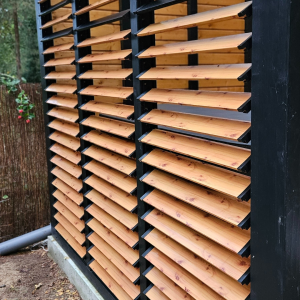
Wood or aluminium?
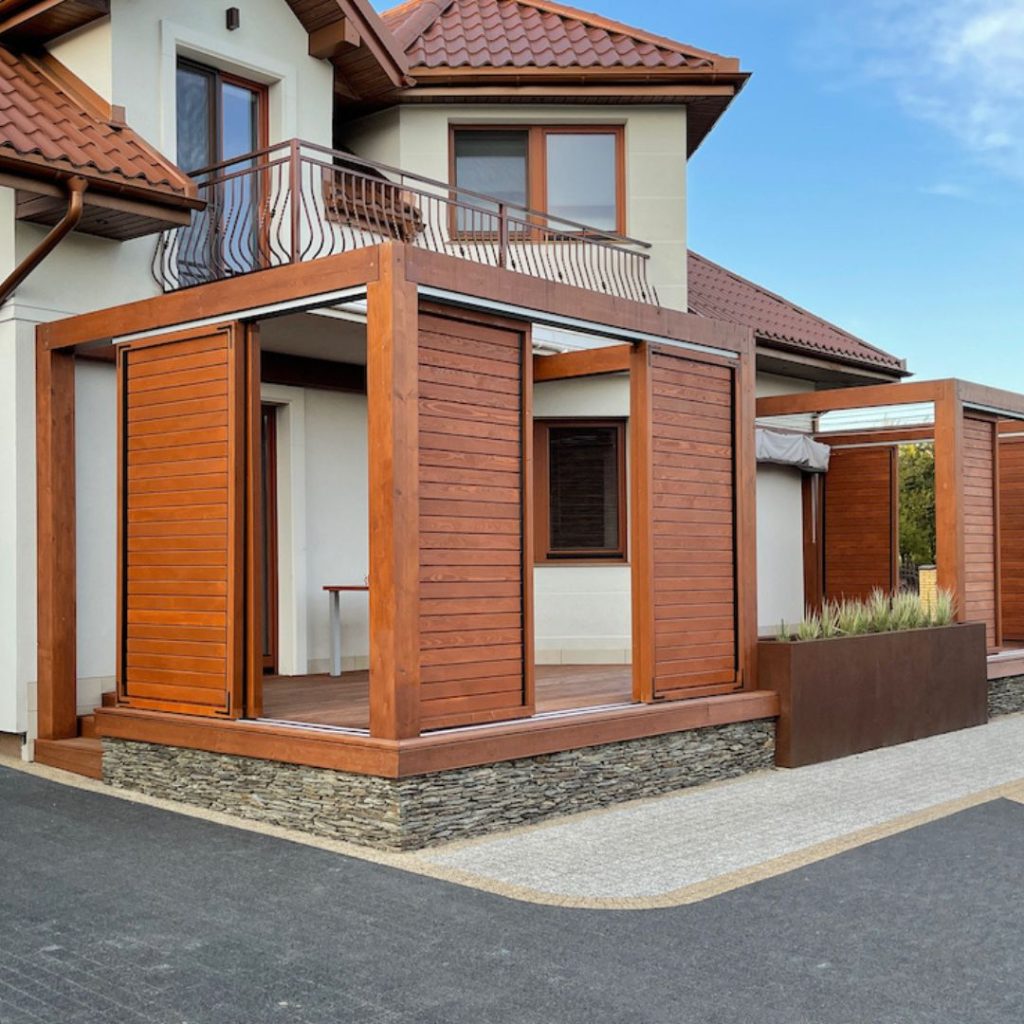
Wood:
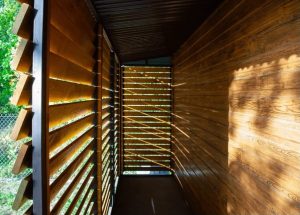
- gives a natural effect,
- but it is heavier,
- requires maintenance,
- and reacts more strongly to humidity and the sun.
Aluminium:
- is dimensionally more stable,
- does not require impregnation,
- works better with large modules,
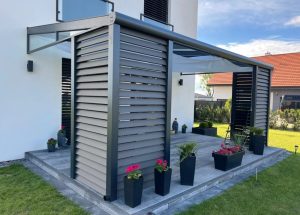
- and can withstand intense weather conditions more easily.
For very wide enclosures, aluminium often proves to be a safer construction solution.
How does wind affect external blinds?
This is a topic that is often overlooked when planning a terrace or pergola development. The larger the surface area of a single module, the greater the load on the mechanism and the stronger the wind action of the entire structure. The large wings act a bit like a sail - especially on open, heavily exposed terraces.
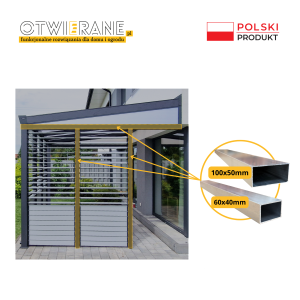
For this reason, it is advisable to divide larger enclosures into several smaller modules instead of one large element. The right choice of frame cross-section and infill material is also important. Overly heavy laths can increase the load on the structure and impair the comfort of everyday use.
A well-designed enclosure should take into account not only its appearance, but also the conditions in which it will operate throughout the year - especially wind, sunlight and humidity.
How do I prepare the structure for the installation of external blinds?
The structure for the blinds must be:
- stable,
- leveled,
- and suitably stiffened.
Most commonly used:
- structural timber,
- aluminium profiles,
- or steel support frames.
Even small deviations can later affect the smooth running of the moving blades.
The most common mistakes when installing external blinds yourself
Modules that are too wide
This is one of the most common mistakes when designing external blinds. The larger the module, the greater the weight of the structure and the heavier the load on the mechanism. Wide sashes work harder in the wind and may offer more resistance when opening. In practice, it is much safer to divide large developments into several smaller segments.
Wrong material
Not every material will work in every location. Wood looks natural, but requires regular maintenance and is more susceptible to moisture and sunlight. Aluminium performs better with large modules and strongly insulated buildings. The wrong material can cause the system to wear out more quickly or cause problems with the operation of the lamellas.
Lack of space for material work
Wood and aluminium are affected by temperature, moisture and the sun. If the components are installed too tightly, the blinds may open more forcefully, rub against the structure or become wedged over time. For this reason, it is advisable to leave a small amount of slack during assembly and not to „press-fit” the installation.
In practice, it is worth taking care of, among other things:
- leaving a clearance of approximately 5 cm from the ground,
- a small gap between the moving parts and the frame,
- and space for the natural operation of the fins and the entire structure during hot, humid and strong sunlight.
Ill-considered direction of opening
Incorrectly planned opening direction of sliding doors from a louvre fitting can make daily use of the terrace or balcony difficult. It is advisable to consider in advance the positioning of the furniture, the passageways, the direction of the world and the direction of the most frequent wind.
Poor support structure
Movable external blinds carry loads due to the weight of the lamellas and the action of the wind. A structure that is too weak or unstable can cause problems with the operation of the mechanism, vibrations and deformation of the entire development.
Omission of wind work
Wind has a huge impact on the performance of external blinds. The larger the surface area of the module, the greater the loads acting on the structure and mechanism. Particularly in the case of open spaces, it is advisable to select module divisions, frame cross-sections and the type of infill accordingly.
Many people focus solely on the appearance of the development, forgetting that movable blinds are a mechanical system that must run smoothly for years.
Is it worth making the blinds yourself?
Yes - provided the structure is well planned and the right components are used.
In our shop you can buy:
- OpenUp System movable blind holders,
- aluminium laths,
- wooden planks,
- frame mounting profiles,
- as well as the assembly components needed to build your own terrace or pergola.
If you carry out development professionally, you can also register in our B2B area.