



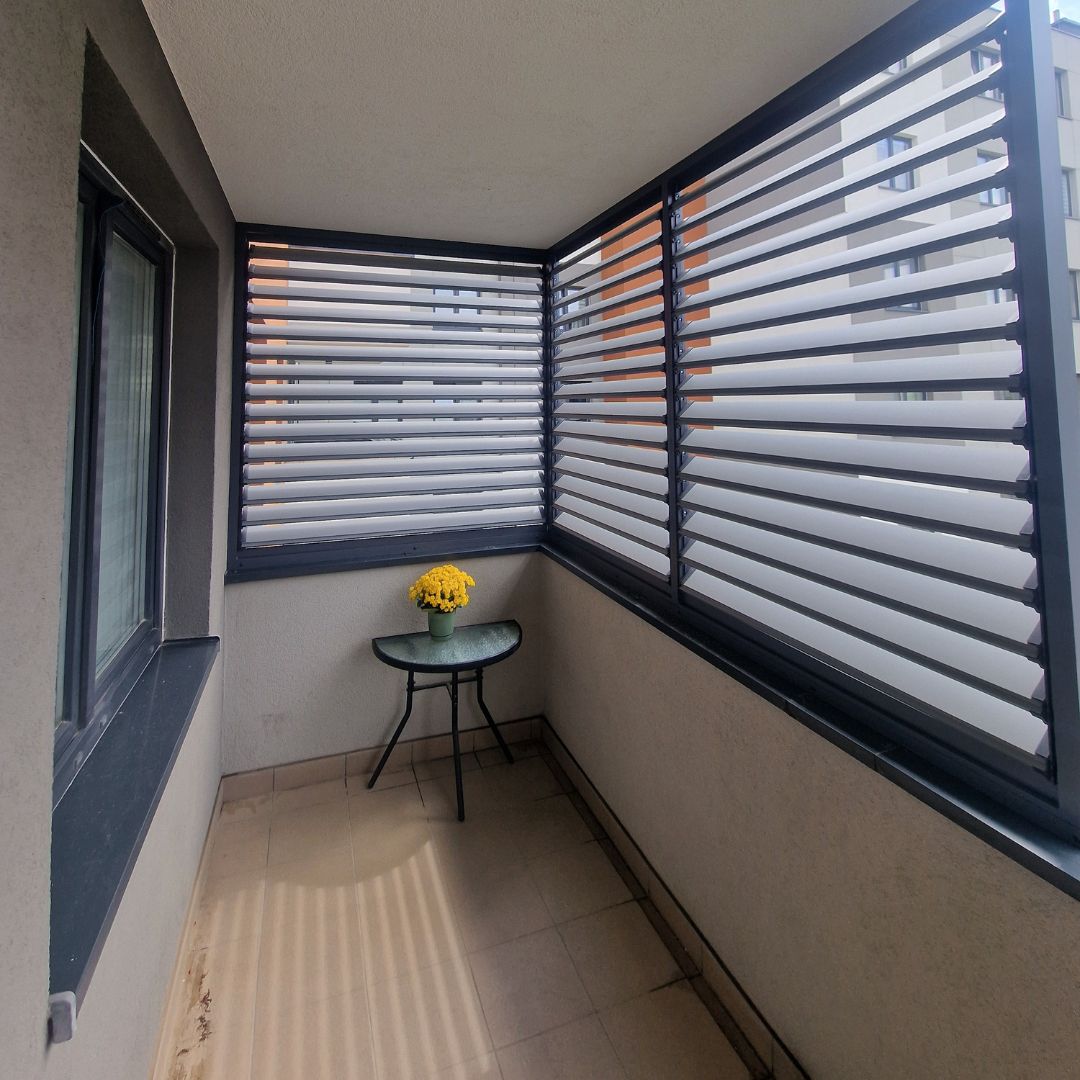
How do I screen my balcony without blacking out my flat?
How to screen your balcony without blacking out your flat? Proven solutions for the block of flats
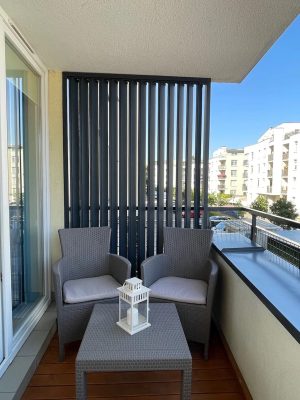
Many people opt out of enclosing their balcony for fear that the flat will become dark and overwhelming. This is one of the most common problems in blocks of flats, especially then, when the balcony is on the north side or the windows are small. However, a well-designed balcony enclosure in a block of flats can shield you from neighbours, wind and sun without completely cutting off daylight. The key is to choose the right materials and construction method. In this article, we suggest how to screen your balcony without darkening your flat.
Why do some balcony enclosures in a block of flats heavily obscure the flat?
The biggest problem arises when the development forms a full, light-impermeable wall. This includes heavy panels, dark panels or poorly designed screens installed very close to the balcony window.
Significance is also:
- colour of materials,
- slat width,
- installation distance from the glass,
- light controllable,
- construction breakdown.
The more „full” the development, the greater the risk of a dark living room effect even on a sunny day.
How to screen your balcony without darkening your flat - movable balcony blinds
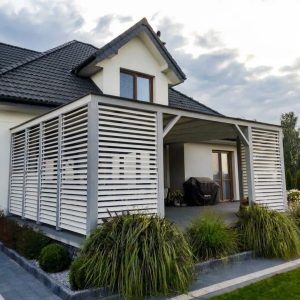
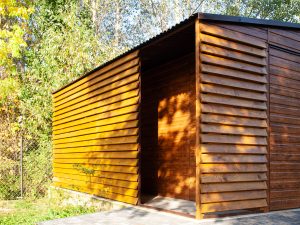
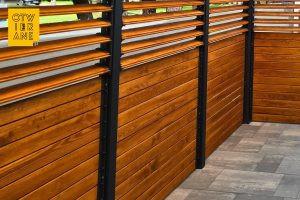
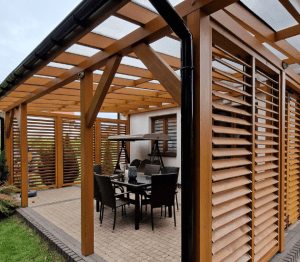
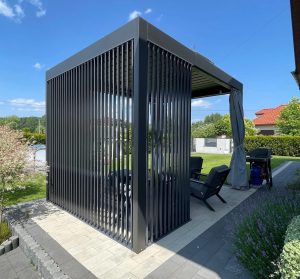
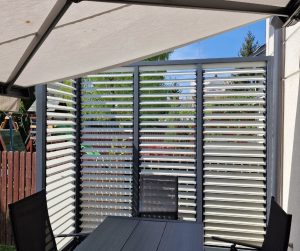
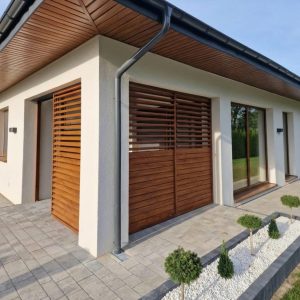
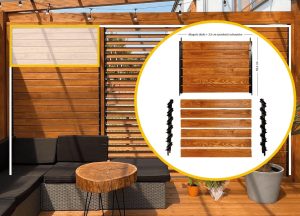
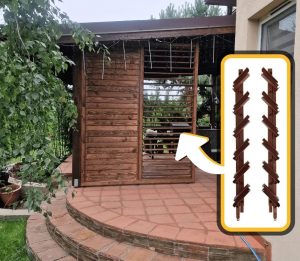
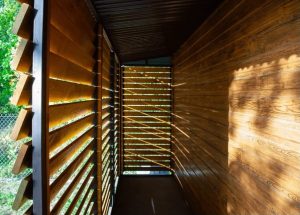
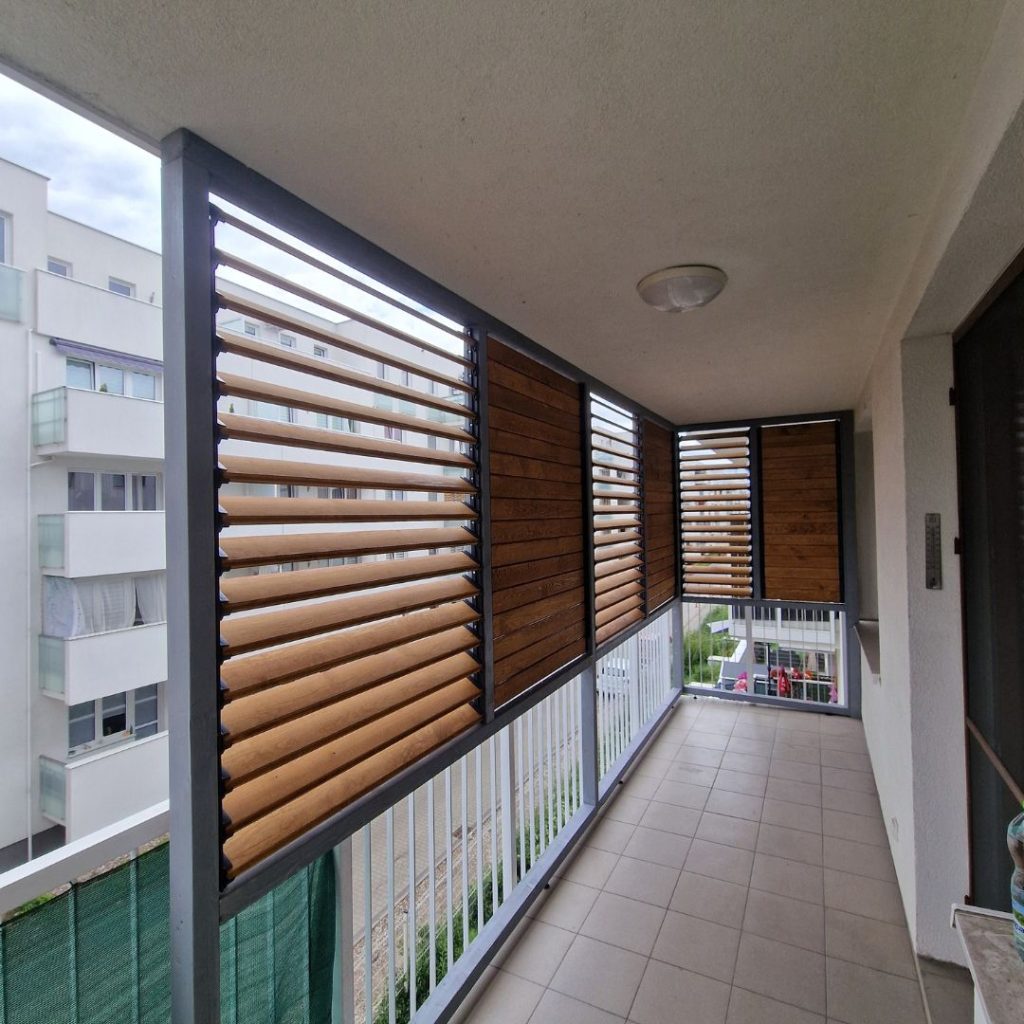
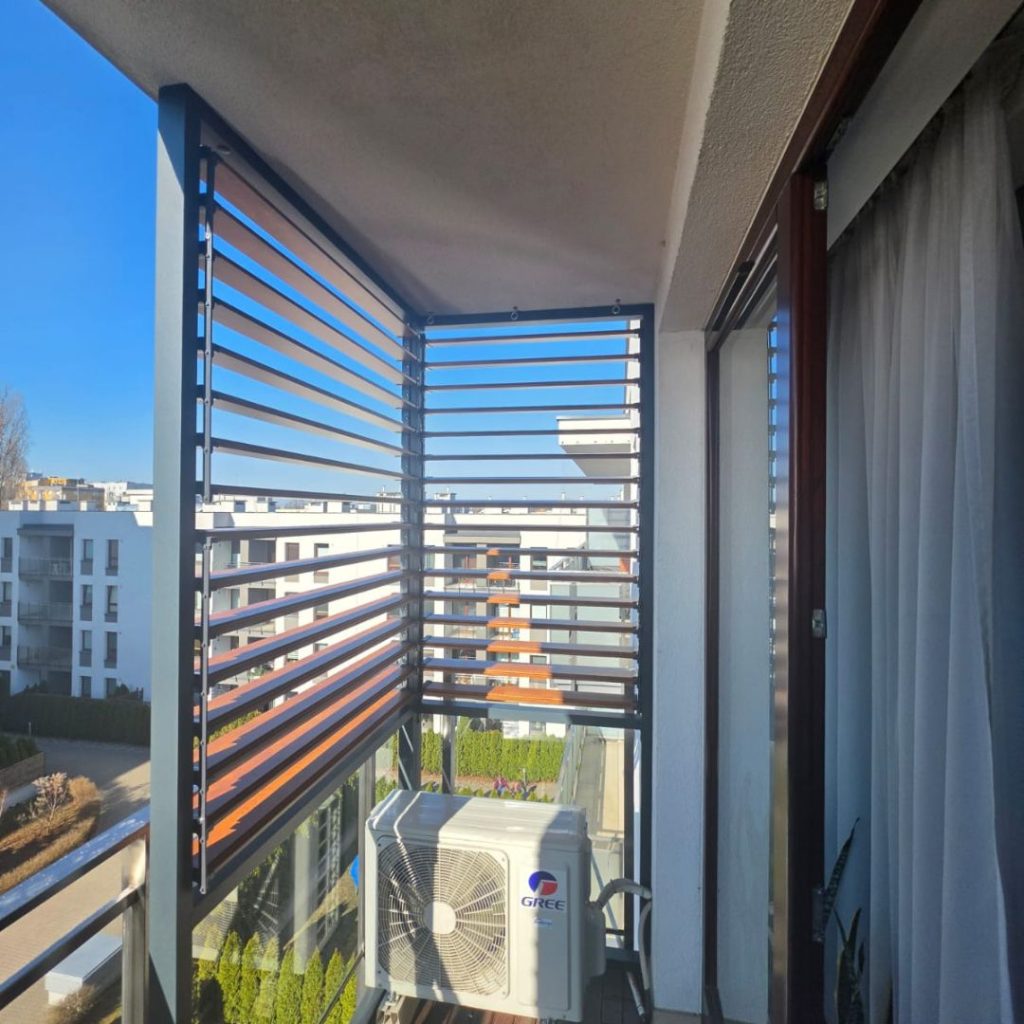
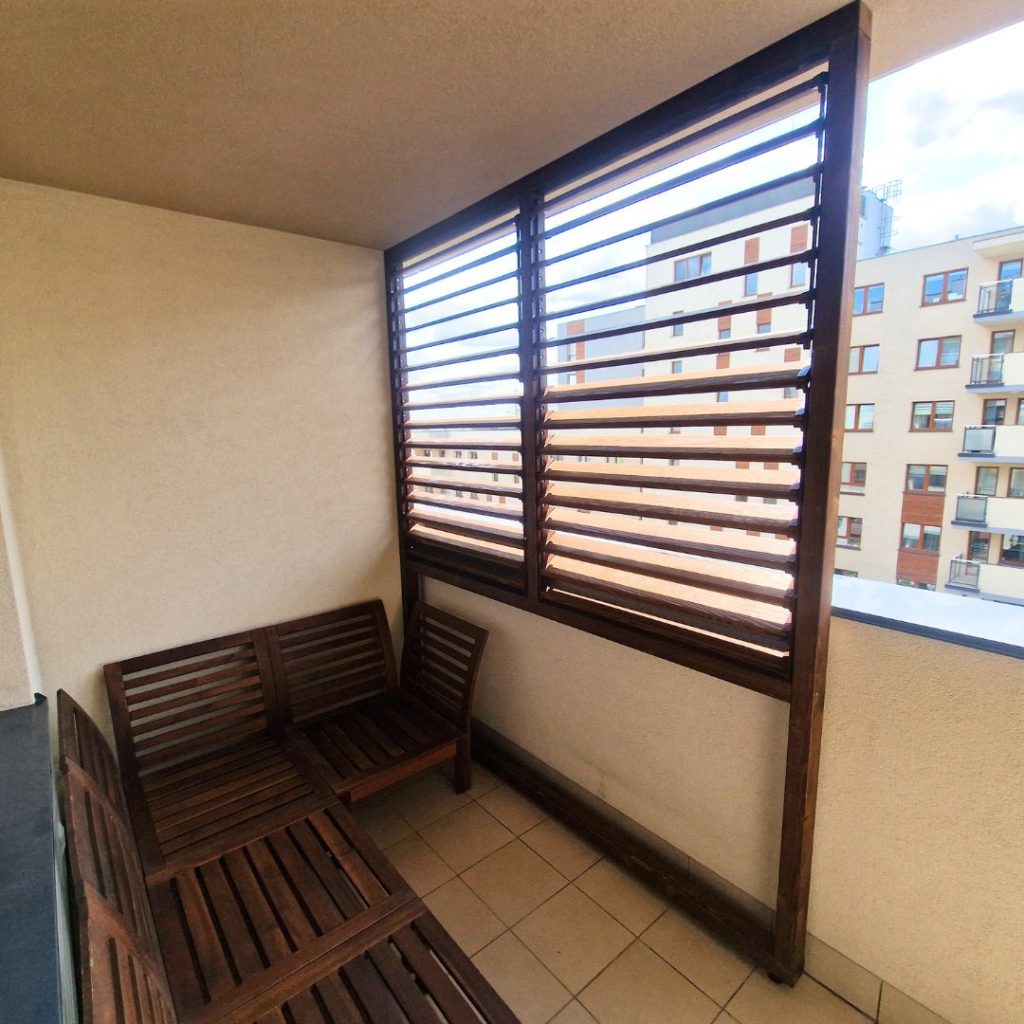
For balconies in blocks of flats very good movable balcony blinds. By adjusting the angle of the boards or slats, the balcony can be partially screened without completely shutting out the light.
In practice, this means that:
- you can shield yourself from your neighbours,
- reduce the heating of the dwelling,
- improve privacy,
- but still keep the natural light in the flat.
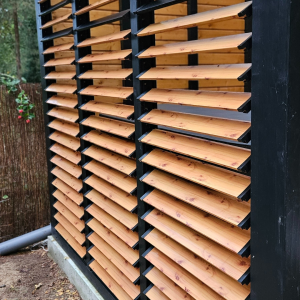
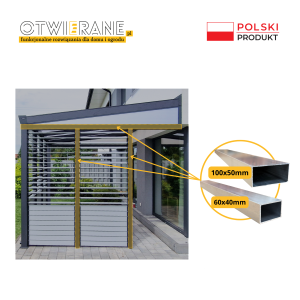
W systems for mounting movable boards such as the OpenUp System You can use either wooden boards or aluminium laths.
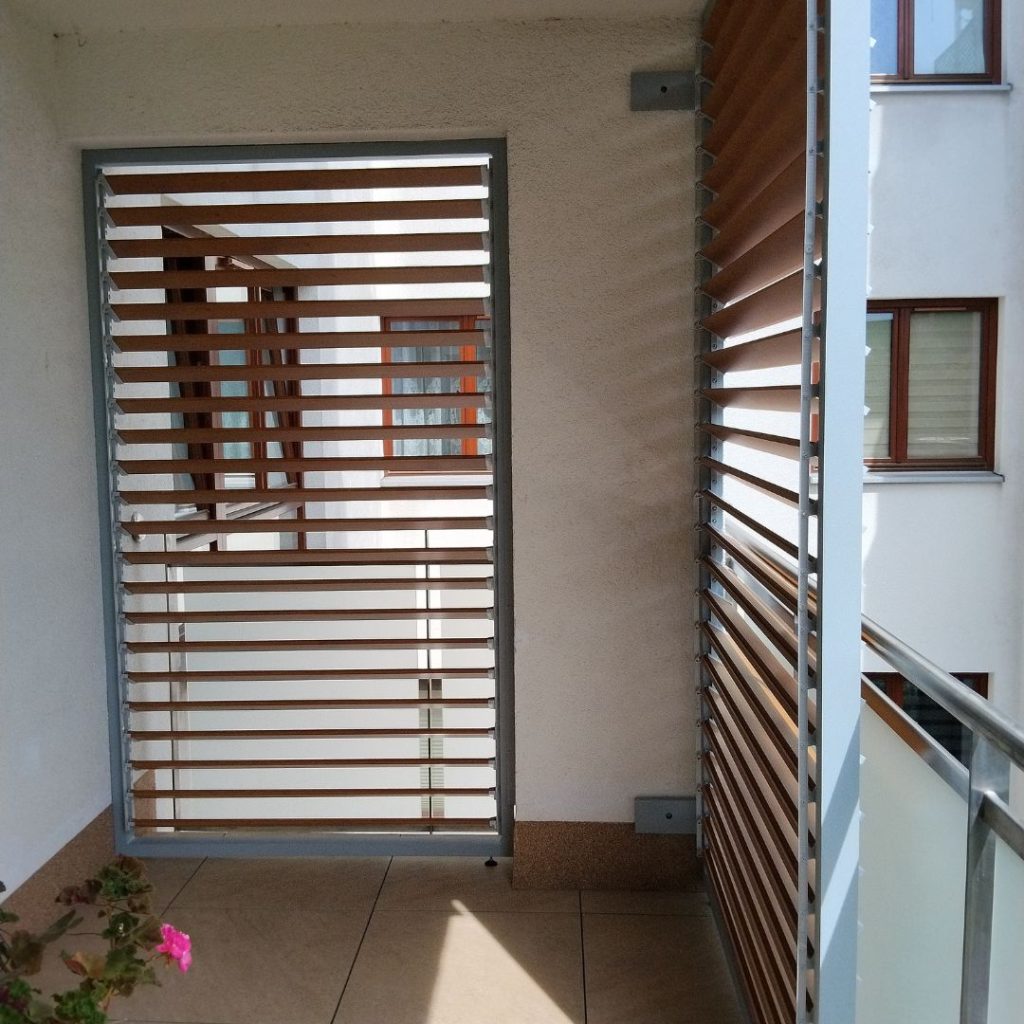
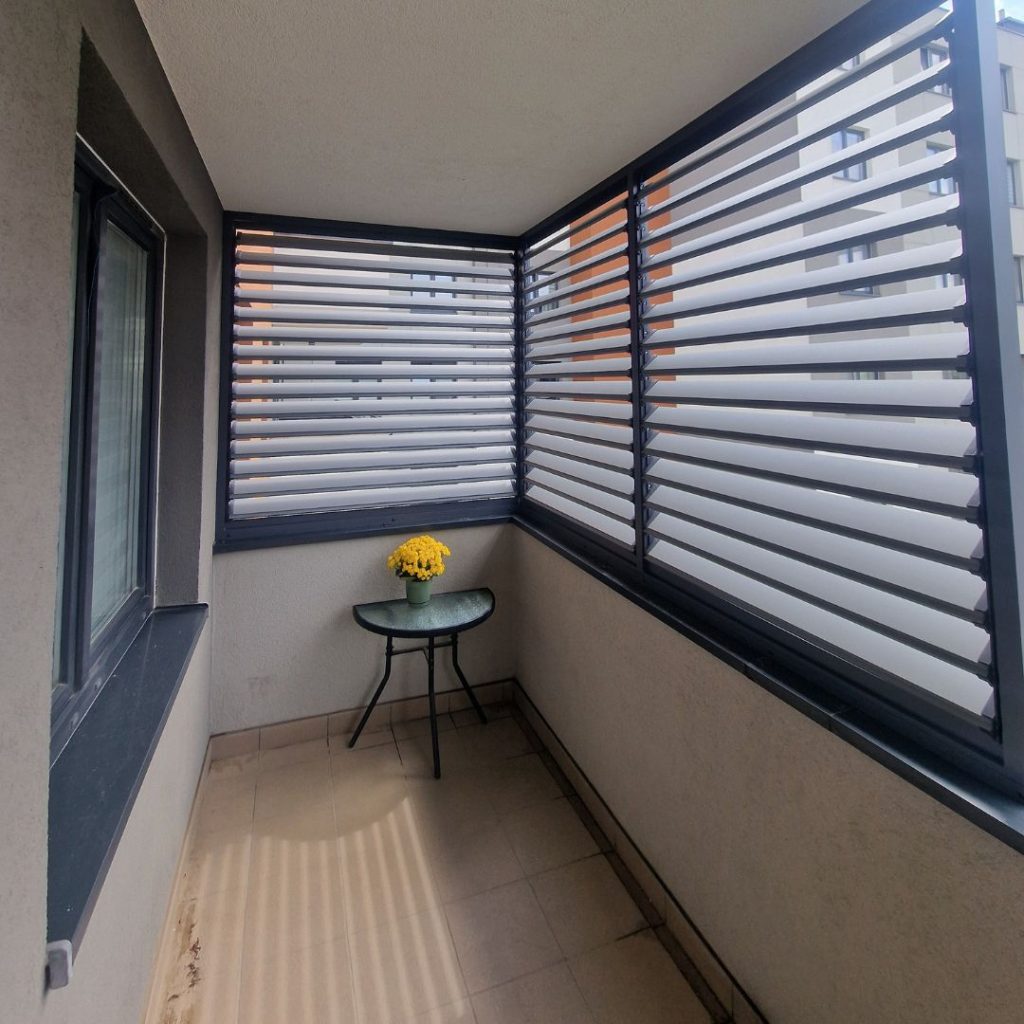
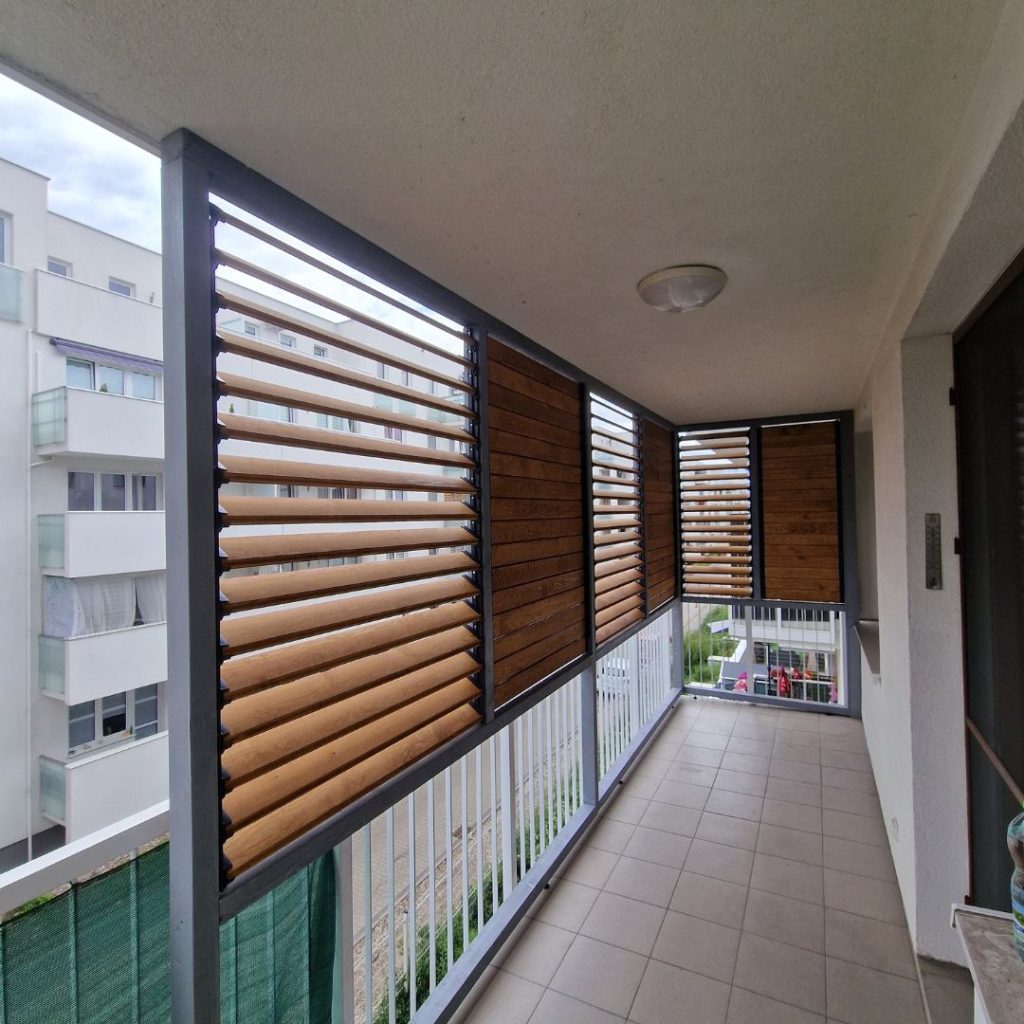
Aluminium slats or wood - which reflects light better
If you want a bright interior, the colour and type of material make a big difference.
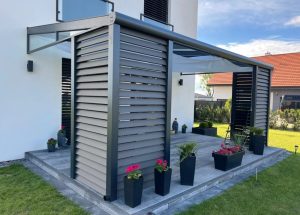
Aluminium laths in bright colours:
- reflect more light,
- less strain on the structure,
- work well on small balconies,
- do not require regular maintenance.
See: aluminium slats for balcony blinds
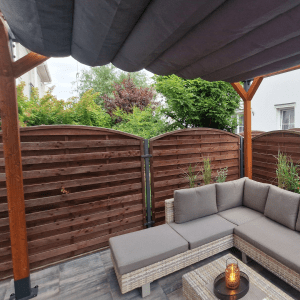
Wood gives a more natural effect, but dark boards can more strongly limit the amount of light coming into the flat. In practice, much depends on:
- board widths,
- spacing,
- setting angle,
- sides of the world.
See: moving boards for balcony blinds
Polycarbonate balcony enclosure - a compromise between shelter and light
In places, where the priority is to retain as much daylight as possible, cellular polycarbonate cladding works very well. This solution is often chosen by those living in blocks of flats, especially when the living room or kitchen has only one exit to the balcony and any additional shading quickly becomes noticeable in the interior.
Cellular polycarbonate transmits light much better than full builds made of dark panels or densely stacked boards. At the same time helps reduce wind, improves the comfort of the balcony and partially shields it from the view of neighbours.
Thanks to the characteristic chambers the material diffuses light more softly than glass, therefore The interior still remains bright, but it heats up less and is not as exposed to the harsh sun.
The colour of the polycarbonate is also of great importance. In practice, the most common colours used on balconies are:
- Milky polycarbonate - gives more privacy and soft light,
- Clear polycarbonate - lets in the most light,
- Graphite or brown polycarbonate - reduces sunlight more severely, but can darken the interior slightly.
In many developments, a combination of several materials works well. For example, the lower part of the development can be made of polycarbonate for wind protection and the upper part of movable slats or boards to regulate the amount of light and the level of privacy.
Milk or clear polycarbonate:
- transmits light,
- limits the wind,
- gives partial privacy,
- does not create a visually heavy wall.
This is a solution often chosen:
- for small balconies,
- in flats facing north,
- where the living room is easily obscured.
See: prefabricated polycarbonate balcony frames
Services: balcony cladding with polycarbonate
How to plan a balcony enclosure so that the flat is still bright
The side of the world is of great importance
Before building a balcony, it is a good idea to analyse the amount of light that already enters the flat. This is particularly important in blocks of flats, where the balcony is very often the main source of light for the living room or kitchen.
Balconies on the north and east sides usually receive less light during the day, so heavy or dark builds can quickly make the interior gloomy. Light-coloured aluminium laths, movable boards or light-transmitting polycarbonate work better in such areas.
With south-facing balconies, the problem is the opposite. There, it often becomes more important to limit the heating of the flat and to be able to regulate the amount of sun.
The size of balcony windows influences the end result
The smaller the glazing, the more any additional shading will be felt. In flats with small balcony windows, it is better to avoid full walls and very dense arrangements of boards or slats.
With large glazings, the possibilities are much greater, as the interior still receives a fair amount of natural light.
The colour of the façade and development can lighten or darken the balcony
It is not only the material itself that matters, but also the colour. Light-coloured surfaces reflect light and help to maintain the optical lightness of the balcony. This makes the flat appear more spacious and brighter.
Dark colours look modern and elegant, but can visually „close off” a space and limit the amount of light entering the interior. In practice, it is worth seeking a compromise between aesthetics and comfort for everyday use.
The depth of the balcony affects the amount of light in the flat
The deeper the balcony, the greater the risk of the flat becoming darker after the development. The problem is particularly noticeable in blocks of flats, where the balconies are set well back from the body of the building.
In such situations, systems that allow the building to be partially opened or the angle of the slats to be adjusted work well. They allow you to control the amount of light depending on the time of day and the weather.
It is not always necessary to enclose a balcony from floor to ceiling
The height of the building is also important. Sometimes there is no need to enclose the entire balcony space with a full wall.
In practice, it is often sufficient to partially cover the most problematic section:
- from the neighbour's side,
- from the street,
- or from the windiest part of the building.
This solution helps to keep more natural light in the flat.
The ability to adjust the light gives the greatest comfort
The greatest everyday comfort is provided by systems that allow the amount of light and level of shading on the balcony to be regulated.
This is why movable balcony blinds are becoming increasingly popular. You can partially open the enclosure, change the angle of the boards or completely expose the balcony when you want more light.
This allows the balcony to better adapt to the weather, the time of day and your current needs without completely darkening the flat.
Prefabricated balcony systems
If you plan to do the development yourself or with the help of a contractor, it is worth choosing modular systems. They make assembly easier, allow you to extend the balcony in stages and give you more control over the end result.
See: kits for enclosing balconies with external movable blinds
Not sure what solution will work for your balcony?
Send a photo, dimensions or design. We will suggest:
- Whether movable boards would work better,
- aluminium laths,
- or polycarbonate cladding.
Contact us: fill in the contact form.